Healthcare for Tourists Italy: What You Need to Know About Accessing Medical Care
Traveling to Italy is a dream for many. The art, history, and food are incredible. But what happens if you get sick or injured while visiting? Knowing how to access healthcare in Italy is essential. I want to share everything I’ve learned about healthcare for tourists Italy, so you feel confident and prepared during your trip.
Understanding Healthcare for Tourists Italy
Italy has a well-developed healthcare system, but it can be confusing for visitors. The country offers public healthcare through the Servizio Sanitario Nazionale (SSN), which provides universal coverage to residents. However, as a tourist, you don’t automatically qualify for free public healthcare.
If you’re visiting Italy, you should plan ahead. Carry travel insurance that covers medical emergencies. This will save you money and stress if you need treatment. Many hospitals and clinics accept tourists, but you may have to pay upfront and claim reimbursement later.
Here are some key points to keep in mind:
Emergency care is available to everyone. If you have a serious injury or illness, call 112 or go to the nearest hospital emergency room.
Bring your European Health Insurance Card (EHIC) if you’re from the EU. This card allows you to access public healthcare at reduced or no cost.
Non-EU visitors should have private travel insurance. This covers doctor visits, hospital stays, and medication.
Pharmacies are widespread and can help with minor ailments. Pharmacists often speak English and can recommend over-the-counter remedies.
By understanding these basics, you can avoid surprises and get the care you need quickly.

How to Access Healthcare for Tourists Italy
When you need medical help abroad, knowing exactly where to go is crucial. Italy offers a mix of public hospitals, private clinics, and on-call services. Here is how to navigate the system effectively:
Emergency Situations (112 & Pronto Soccorso)
For life-threatening emergencies, dial 112. This universal European number connects you to ambulance, police, and fire services.
Where to go: Go to the nearest hospital ER, known as the Pronto Soccorso. They are open 24/7.
Cost: Urgent care is provided to everyone regardless of insurance status. Note that non-life-threatening visits may incur a "ticket" (co-pay) fee upon discharge.
Visiting a General Practitioner (GP)
If your condition is not urgent, you can visit a GP. Some GPs accept tourists, but many only see registered residents and most speaks only Italian. Private clinics are a good alternative for non-emergency care.
Pharmacies (Farmacia)
Look for the glowing green cross. Italian pharmacists are highly trained and can act as a first point of contact for minor issues like colds, allergies, or mild pain.
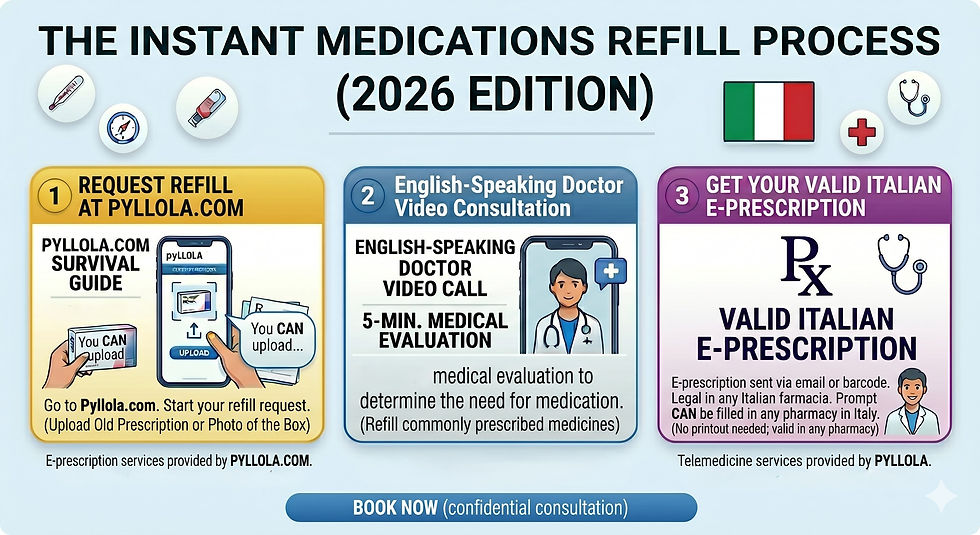
What they can do: They can offer medical advice and provide over-the-counter medication. They cannot fill foreign prescriptions, so you'll need to get a prescription from a local doctor or online with services like Pyllola (request your prescription refill here)
Private Clinics
For faster service and a possibility to find English-speaking staff, private clinics (Clinica Privata) are often better choice for travelers than a locl GP.
While more expensive than the public system, you will likely avoid long wait times. Most travel insurance policies will reimburse these visits - just be sure to keep all receipts and medical reports.
Telemedicine & English-Speaking Services
If you are unable to visit a clinic or are worried about the language barrier, Telemedicine is an excellent solution.
How it works: Services like Pyllola or general telemedicine apps allow you to have a video consultation with a certified, English-speaking doctor within minutes.
Prescriptions: These doctors can often issue valid prescriptions that you can show directly to any Italian pharmacy on your phone.
Language Tip: If you must visit a public facility in person, download a translation app (like Google Translate) beforehand, as English fluency varies among public hospital staff.
Remember to carry your passport, insurance documents, and any medical records with you. This will speed up the process and ensure you get the right treatment.
Do U.S. Citizens Get Free Healthcare in Italy?
This is a common question. The short answer is no, U.S. citizens do not get free healthcare in Italy. Unlike EU citizens with an EHIC card, Americans must rely on private travel insurance or pay out of pocket.
Here’s what you should know:
Emergency care is provided regardless of nationality, but you will be billed.
Routine or non-emergency care is not free for U.S. visitors. You must pay or have insurance coverage.
Travel insurance is highly recommended. It can cover hospital stays, doctor visits, and medication costs.
If you plan to stay in Italy for an extended period, you might consider registering with the local health authority (ASL) and paying a fee to access public healthcare. However, this is usually for residents, not short-term tourists.
In summary, don’t expect free healthcare as a U.S. visitor. Prepare by purchasing comprehensive travel insurance before your trip.

Travel Insurance Requirements
Mandatory vs. Recommended Whether you need insurance depends on where you are from, but having it is always smart.
Schengen Visa Applicants (Non-EU): If you require a visa to enter Italy (e.g., from India, China, South Africa), travel insurance is mandatory.
The Rule: Your policy must cover at least €30,000 in medical expenses, include repatriation (getting you home), and be valid for the entire Schengen area, not just Italy. You will need to show proof of this to get your visa.
Visa-Free Travelers (e.g., USA, UK, Canada, Australia): Insurance is not legally required for entry, but it is highly recommended.
Why? While emergency care is guaranteed, it is not always free. You may be charged for "non-life-threatening" ER visits, and medical repatriation flights can cost upwards of €50,000.
Dental Emergencies
Public vs. Private Care Dental pain can ruin a trip fast. Unlike general healthcare, the public system offers very limited dental support.
Public Dental ER (Pronto Soccorso Odontoiatrico): Only available in large public hospitals (like the George Eastman in Rome).
What they do: They strictly handle acute emergencies (severe abscesses, uncontrollable bleeding). They generally perform extractions or temporary pain relief only.
Cost: Usually requires a "ticket" (co-pay) fee unless exempt.
Private Dentists (Dentista Privato): For broken teeth, lost fillings, or general toothaches, you must see a private dentist.
Finding one: Search Google Maps for "Dentista" or ask your hotel staff
Payment: You will pay out of pocket (typically €100–€200 for urgent treatment). Ask for a detailed invoice ("fattura") to claim it back from your travel insurance later.
Tips for Staying Healthy and Safe While Traveling in Italy

Prevention is always better than cure. Here are some practical tips to help you stay healthy during your visit:
Get travel insurance before you leave. Check that it covers medical emergencies, hospital stays, and repatriation.
Carry a basic first aid kit. Include plasters, antiseptic wipes, painkillers, and any personal medication.
Stay hydrated and eat well. Italy’s food is delicious, but try to avoid street food that may not be hygienic.
Know the location of the nearest hospital or clinic. Especially if you’re staying in a rural area.
Keep emergency numbers handy. 112 is the universal emergency number in Italy.
Learn basic Italian health phrases. This can help you communicate symptoms or needs quickly.
Avoid risky activities without proper guidance. Hiking, swimming, or driving in unfamiliar areas can lead to accidents.
By taking these steps, you reduce the chance of needing medical care and make your trip smoother.
Why Pyllola is Your Best Choice for Healthcare in Italy
If you need medical help while in Italy, Pyllola is here to make the process easy and stress-free. We understand how daunting it can be to navigate a foreign healthcare system. That’s why Pyllola offers quick, reliable medical assistance tailored for English-speaking travelers.
Here’s what makes Pyllola stand out:
Access to English-speaking doctors and specialists. No language barriers.
Fast appointments and minimal waiting times. We value your time.
Transparent pricing and easy payment options. No hidden fees.
Support with insurance claims and paperwork. We help you get reimbursed.
Coverage across Italy’s major cities and tourist destinations.
Whether you need a consultation, prescription, or emergency care, Pyllola is your trusted partner. We want you to enjoy your trip without worrying about healthcare.
For more detailed information on healthcare in italy for foreigners, visit our website and discover how we can assist you.
Traveling in Italy is a wonderful experience, and knowing how to access healthcare makes it safer and more enjoyable. With the right preparation and support, you can focus on exploring this beautiful country with peace of mind. Remember, emergencies can happen, but with Pyllola and the tips shared here, you’re never alone. Stay healthy and enjoy your Italian adventure!