
Street Smart in Italy: Protecting Your Health and Your Belongings
The Physiological Toll of Petty Crime

A near-miss or a theft in Italy isn't just a financial loss; it’s a massive cortisol and adrenaline spike that can disrupt your circadian rhythm, trigger debilitating migraines, or exacerbate pre-existing heart conditions. In 2026, being "street smart" is about more than just your wallet - it’s about protecting your nervous system.
You’re likely picturing yourself lost in the beauty of Venice, snapping photos at the Trevi Fountain, or browsing the markets of Florence. You aren't picturing the sickening lurch in your stomach when you realize your bag is open, or the "biological hijack" that happens when a distraction scam catches you off guard.
The "Termini Alert": A Personal Lesson in Vigilance
I’ll never forget my second trip to Rome. I felt like a seasoned traveler as I walked through the crowded area near Termini Station. I had my crossbody bag zipped tight - or so I thought. A street vendor distracted me for a mere three seconds. When I looked back, my zipper was ajar.
Thankfully, nothing was taken, but the damage was done. That split-second realization sent a jolt of adrenaline through my system that lingered for hours. I spent the rest of the day hyper-vigilant and antsy, my "vacation brain" replaced by a "survival brain." It was a stark reminder: the stress of a near-miss can be as physically draining as the incident itself.
Why Street Smarts are a Health Priority
While Italy remains one of the safest and friendliest destinations in the world, petty crime targeting tourists is a reality. At Pyllola, we believe preparation is your best defense against the "Post-Theft Syndrome" - a state of acute stress that can compromise your well-being.
Beyond the Wallet: The Biological Impact of Theft
The Emotional Cascade: Feeling violated or "tricked" triggers a shame response that can dampen your travel spirit and lead to social withdrawal.
Acute Stress Response: That initial adrenaline spike often leads to a "crash," resulting in disrupted sleep, tension headaches, and gastrointestinal distress (the gut-brain reaction to stress).
The Medication Risk: One of the most overlooked dangers of theft is the loss of daily medications. Losing a bag often means losing access to critical prescriptions, which can lead to a medical emergency if not resolved quickly.
Cognitive Drain: Spending your precious vacation hours at an embassy or police station causes "decision fatigue" and mental exhaustion, making you more prone to further accidents or illness.
Pyllola Insight: Being prepared isn't just about security; it's about safeguarding your peace of mind so your body stays in "rest and digest" mode - the state required to actually enjoy la dolce vita.
The Anatomy of a Distraction: Common Scams in Italy (2026)
Knowledge is your primary defense. In 2026, street-level theft has evolved into a high-speed psychological game. Most scams rely on "Cognitive Overload" - flooding your senses so you don't feel the physical removal of your valuables.
1. The Crowded Transit "Squeeze" (Physical Desensitization)

The Tactic: In high-density areas like Rome’s Line 64 bus or Florence's Santa Maria Novella, teams create artificial "bottlenecks."
The Science: When multiple people bump into you simultaneously, your nervous system stops registering individual points of contact. This "white noise" of touch allows a pickpocket to open a zipper or reach into a pocket undetected.
Target: Back pockets and unclipped crossbody bags.
2. The 'Gift' Scam (Forced Social Reciprocity)

The Tactic: Near the Colosseum or Milan’s Duomo, someone may aggressively tie a "friendship" bracelet on your wrist or hand you a rose.
The Science: This exploits a psychological "loop" where you feel obligated to engage because of the physical contact. While you are busy trying to politely return the item, you are distracted from your surroundings.
The Warning: This scam often involves a second person watching where you reach for your wallet to "pay" them.
3. The 'Helpful' ATM Stranger (Shoulder Surfing)

The Tactic: A stranger points out a "machine error" or offers to help navigate the Italian-language menu.
The Science: They are looking for your PIN or using a "skimmer" to clone your card.
Pyllola Safety Tip: Never use an ATM in a dimly lit area. If your card is "eaten," do not accept help from anyone standing nearby; enter the bank directly or call your bank’s emergency line immediately.
4. The Fake Petition (Visual Blocking)
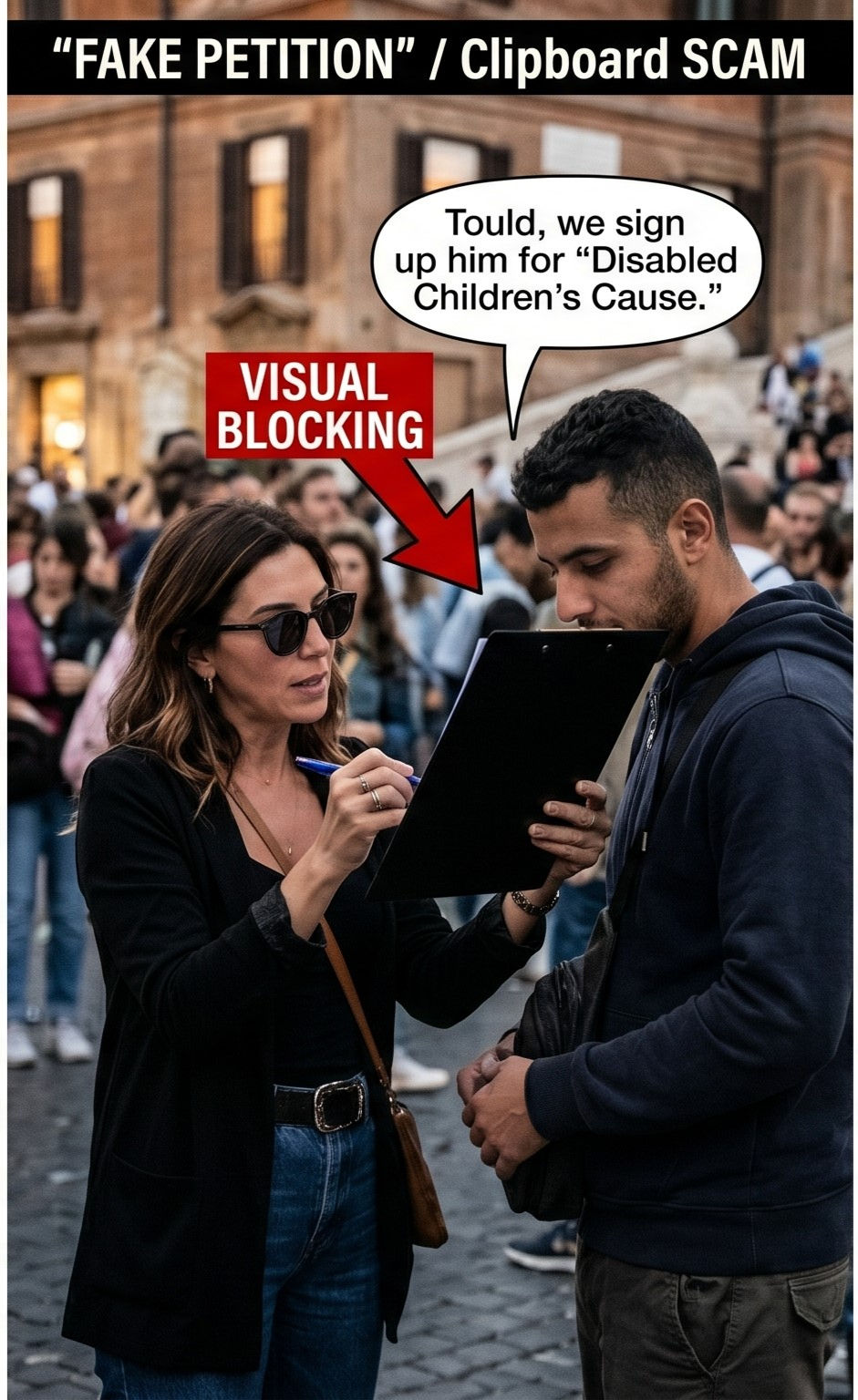
The Tactic: An individual with a clipboard asks you to sign for a "noble cause" (e.g., disabled children or drug-free youth).
The Science: The clipboard is held high, creating a visual barrier between your eyes and your waistline. As you read the paper, their partner (often out of sight) accesses your bag from below.
5. The 'Bird Poop' or Spill Scam (Tactile Hijacking)
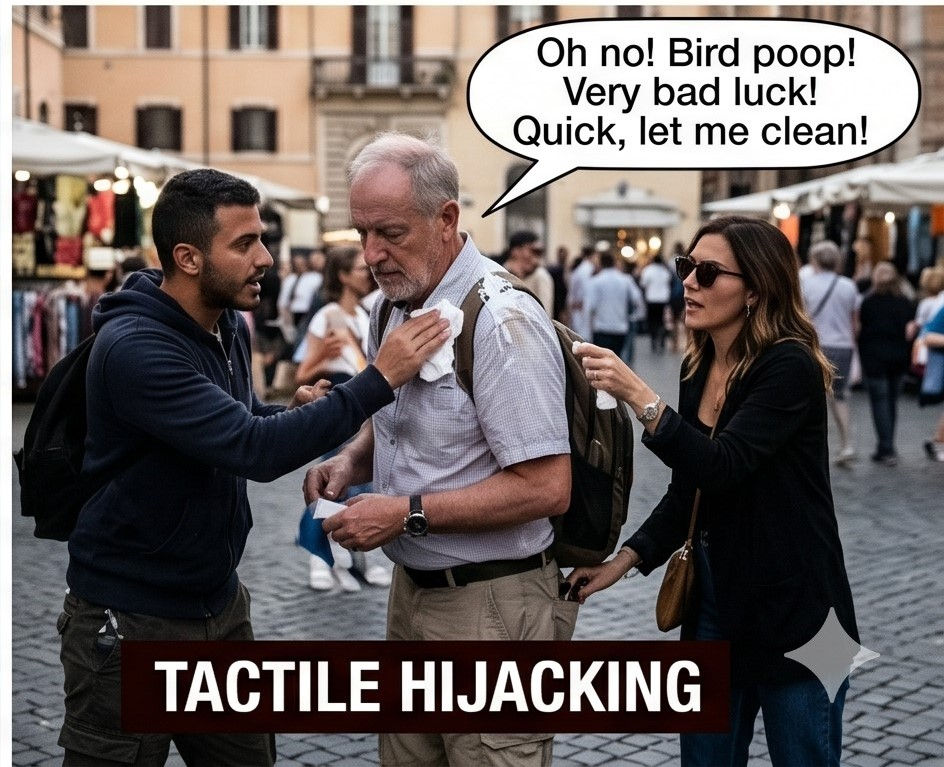
The Tactic: You suddenly feel a liquid on your shoulder (often mustard or white liquid). A "helpful" stranger rushes over with tissues to help you clean up.
The Science: This is the most aggressive form of tactile distraction. By creating an "emergency" cleanup, they force you to put down your bags or focus entirely on your clothing while they systematically empty your pockets.
6. The 'Aperitivo' & Taxi Trap (Financial Fatigue)

The Tactic: Unofficial taxis or restaurants in "tourist-trap" squares may inflate prices or add unlisted "service fees" (coperto).
The Science: Scammers rely on "Traveler’s Exhaustion." By the end of a long day, your brain is less likely to double-check a receipt or question a meter.
Defense: Always use official white taxis and check the coperto (cover charge) on the menu before sitting down.
The Prevention Protocol: Engineering Your Safety in Italy
In 2026, street safety isn't just about being lucky; it’s about reducing your "Target Profile." By implementing these five pillars of defense, you protect your belongings and, more importantly, your peace of mind.
1. Hardware for the Modern Traveler (Layered Security)
The "Invisible" Layer: Use a thin, moisture-wicking neck pouch or money belt for your passport and high-denomination cash. This should be worn under your base layer.
The Front-Facing Rule: If using a crossbody bag, choose one with anti-slash mesh and locking zippers. Always keep the bag positioned on your chest.
The Backpack Pivot: In high-risk transit zones (Rome's Termini or the Naples Metro), wear your backpack on your front. It may feel unconventional, but it removes the "blind spot" that pickpockets rely on.
The 2026 Digital Safety Net: Store encrypted scans of your passport and medical prescriptions in a secure cloud folder. If your physical copies are lost, a Pyllola doctor can use these digital records to verify your health history and issue emergency refills.
2. Situational Awareness (The 360-Degree Scan)
The "Head-Up" Habit: Chronic "phone-staring" makes you a prime target. Use bone-conduction headphones for GPS directions so your ears stay open to your surroundings while your eyes stay on the street.
ATM Hygiene: Only use ATMs located inside bank lobbies. Avoid standalone street machines, which are more susceptible to physical skimmers and "shoulder surfing."
The "Gut-Brain" Connection: Your intuition is a biological early-warning system. If a crowd feels too "tight" or a stranger’s approach feels rehearsed, move to a well-lit shop or café immediately.
3. Strategic Body Language (Projecting Authority)
Walk with "Local" Purpose: Even if you are lost, walk with a steady pace toward a landmark. If you need to check a map, step inside a store or restaurant first.
The Power of 'No': When approached for a "gift" or petition, maintain eye contact and give a firm, audible "No, grazie." Do not stop walking. In 2026, scammers count on your desire to be "polite" to keep you stationary.
Thermal Regulation: Avoid over-layering in summer just to hide bags; overheating leads to fatigue and decreased cognitive awareness, making you more vulnerable to distraction.
4. Digital & Smartphone Hardening

The Phone Strap: Use a high-quality wrist or neck lanyard. "Snatch-and-run" thefts of smartphones are the most common petty crime in 2026.
Biometric Locking: Ensure FaceID or Fingerprint locks are active. In the event of a theft, this prevents unauthorized access to your banking and health apps.
The Digital Wallet: Use Apple Pay or Google Pay whenever possible. This allows you to keep your physical credit cards locked in the hotel safe, reducing the "exposure time" of your wallet.
5. The "Safe-Zone" Strategy (Accommodation)
The Safe is Standard: Never carry all your cash. Use the hotel safe for your "emergency fund" and your backup credit card.
Discretion in the Lobby: Avoid discussing your itinerary or room number loudly in common areas.
he Recovery Protocol: Action Steps After an Incident
If the unthinkable happens, your priority must shift from loss prevention to health preservation. The "biological shock" of a theft can cloud your judgment; follow these steps methodically to regain control.
1. Immediate Physical Safety
De-escalate: In the rare event of a direct confrontation, do not resist. Property can be replaced; your physical safety cannot.
Exit the Zone: Move to a "Safe Harbor" - a hotel lobby, a bank, or a busy café - to catch your breath and lower your heart rate before making phone calls.
2. Administrative Recovery
Report to Authorities: Locate the nearest Stazione Carabinieri or Polizia. You will need a Denuncia (police report) for insurance and passport replacement. Use a translation app if an English-speaking officer is unavailable.
Freeze Financials: Use your banking app or emergency international numbers to freeze all compromised cards immediately.
Embassy Liaison: If your passport is missing, contact your national consulate. They can issue emergency travel documents, but they cannot provide medical or financial aid.
3. The Medical Safety Net: Pyllola’s Role
The aftermath of a crime often triggers a secondary crisis: the loss of essential daily medication. This is where Pyllola provides a vital bridge back to health.
Emergency Medication Replacement: If your prescriptions were in your stolen bag, do not wait to see if you "feel okay" without them. A Pyllola doctor can conduct a 15-minute video consultation to verify your medical history and issue a digital e-prescription valid at any Italian Farmacia. For travelers on heart medication, insulin, or high-level anti-anxiety meds, a stolen bag is a time-sensitive medical event. Pyllola bridges the gap between the police station and the pharmacy.
Managing Acute Stress: The "violation" of theft can trigger severe anxiety, sleep disturbances, or panic attacks. We provide a confidential space to discuss these symptoms and offer medical strategies to stabilize your nervous system so you can continue your trip.
Trauma Triage: Even minor scuffles can result in "hidden" injuries like sprains, bruises, or elevated blood pressure. A digital assessment ensures you aren't ignoring a condition that could worsen during your travels.
Insurance Documentation: If your stress or injury requires you to cancel parts of your trip, our doctors can provide the necessary medical certificates and documentation for your travel insurance claims.
Conclusion: Protecting Your 'Bella Vita'
Italy remains one of the world's most captivating and safe destinations. However, being "Street Smart" in 2026 means acknowledging that your peace of mind is your most valuable possession. By engineering your safety through proactive habits and knowing exactly who to call when things go wrong, you strip the power away from scammers.
Don't let a 30-second distraction define your entire Italian experience. Whether you need a replacement prescription or professional support to manage the stress of a "close call," Pyllola is your medical anchor in Italy.
Stay vigilant, stay healthy, and travel with the confidence of a local.
Viaggia sicuro!


