Pregnancy Food Safety in Italy: What to Eat, What to Avoid & How to Ask

Italy is a dream destination for food lovers, but traveling while pregnant often comes with hidden anxiety about dining out. Between unpasteurized cheeses, artisanal cured meats, and regional specialties, navigating an Italian menu requires a clear understanding of local culinary practices and food safety standards.
This guide outlines what you can safely enjoy, what high-risk foods to avoid, and the exact Italian phrasing you need to order with total confidence.
🚨 Quick Summary: The High-Risk Foods Rule in Italy
❌ AVOID: Soft unpasteurized cheeses (latte crudo), non-heat-treated cured meats (salumi crudi like Prosciutto di Parma or Salame), raw/undercooked eggs in fresh desserts (Tiramisù), raw shellfish, and unwashed raw produce.
cooked or heated cheeses (Pizza, Lasagna, Fonduta), fully cooked cured meats (Mortadella, Prosciutto Cotto), cooked meats and fish, pasteurized dairy, and washed or cooked vegetables.
🩺 Accidental Exposure or Symptoms? If you suspect you consumed a high-risk item or experience GI issues, fever, or cramps, consult an English-speaking doctor on Pyllola for fast, local clinical guidance.
1. Cured Meats & Salumi: Toxoplasmosis & Listeria Risks
The primary concern with Italian cured meats during pregnancy is Toxoplasmosis (Toxoplasma gondii), a parasitic infection that can be transmitted through raw or undercooked meat and non-heat-treated charcuterie.
High-Risk (Avoid Unless Steaming Hot):
Prosciutto Crudo (Parma, San Daniele)
Salame (all regional varieties)
Bresaola
Speck & Pancetta (uncooked)
Capocollo / Coppa
Clinical Note: Curing or aging meat with salt does not consistently destroy Toxoplasma cysts or eliminate Listeria monocytogenes risk. However, heat does. If these meats are baked on a high-temperature pizza or cooked thoroughly in a pasta sauce (such as crispy Pancetta in a dish), they are safe to consume.
Safe to Eat (Fully Cooked Salumi):
Prosciutto Cotto (high-quality cooked ham)
Mortadella (cooked during production)
Porchetta (roast pork cooked at high temperatures)

2. Cheeses & Dairy: Unpasteurized vs. Industrial
Italian cheese making has strict quality controls, but traditional artisanal cheeses often use raw milk (latte crudo), which carries a risk of Listeria monocytogenes.
High-Risk (Avoid Unless Labelled Pasteurized or Fully Melted):
Fresh, artisanal soft cheeses made with raw milk (Gorgonzola Dolce, unpasteurized Taleggio, fresh farmstead Robiola, soft goat cheeses).
Safe to Eat:
Hard Aged Cheeses: Parmigiano Reggiano and Grana Padano. Due to their extremely low moisture content and long aging process, hard cheeses do not support bacterial growth and are safe even if made from raw milk.
Pasteurized Fresh Cheeses: Supermarket or commercially produced Mozzarella, Burrata, Ricotta, and Mascarpone (made from pasteurized milk, or latte pastorizzato).
Fully Melted / Baked Cheeses: Any soft cheese cooked until bubbling hot (e.g., inside a baked lasagna or four-cheese pizza).
3. Raw Eggs, Desserts & Sauces: Salmonella Risk
Fresh Italian cooking frequently uses raw or lightly cooked eggs, presenting a risk for Salmonella.
High-Risk Items:
Authentic Tiramisù: Traditional recipes use raw egg yolks whipped into the mascarpone cream without heat treatment.
Authentic Spaghetti alla Carbonara: Made by tossing hot pasta with raw egg yolks. While the hot pasta cooks the egg partially, it may not reliably reach the temperature required (71° C or 160° F) to kill pathogens.
House-made Gelato / Artisanal Creams: Always confirm whether raw egg yolks are used in custard-based flavors (Crema, Zabaione).
4. Raw Shellfish, Seafood & Produce
Seafood Safety: Avoid raw fish dishes (Carpaccio di Pesce, Crudo di Mare) and undercooked shellfish due to risks of Vibrio, Anisakis, and Hepatitis A. Stick to fully cooked seafood, like grilled sea bass (Spigola) or thoroughly steamed mussels (Cozze).
Fresh Produce: Toxoplasma parasites can reside in soil. When eating raw salads or fresh fruit at restaurants, ensure they have been thoroughly washed. At local markets, wash all produce thoroughly with clean water before eating.
🍝 Essential Italian Menu Translation Guide for Pregnancy Food Safety
To communicate your dietary requirements clearly to restaurant staff, save these phrases to your phone:
What You Want to Ask | Italian Phrase | Pronunciation Guide |
"I am pregnant." | Sono in gravidanza. | SOH-noh een grah-vee-DAHN-tsah |
"Is this cheese pasteurized?" | Questo formaggio è pastorizzato? | KWEH-stoh for-MAHD-djoh eh pahs-toh-reed-ZAH-toh? |
"Does this contain raw egg?" | Contiene uova crude? | Kohn-TYEH-neh WOH-vah KROO-deh? |
"Is the meat fully cooked?" | La carne è ben cotta? | Lah KAHR-neh eh behn KOH-tah? |
"I cannot eat raw cured meats." | Non posso mangiare salumi crudi. | Nohn POHS-soh mahn-DJAH-reh sah-LOO-mee KROO-dee |
Need Medical Guidance While Traveling in Italy?
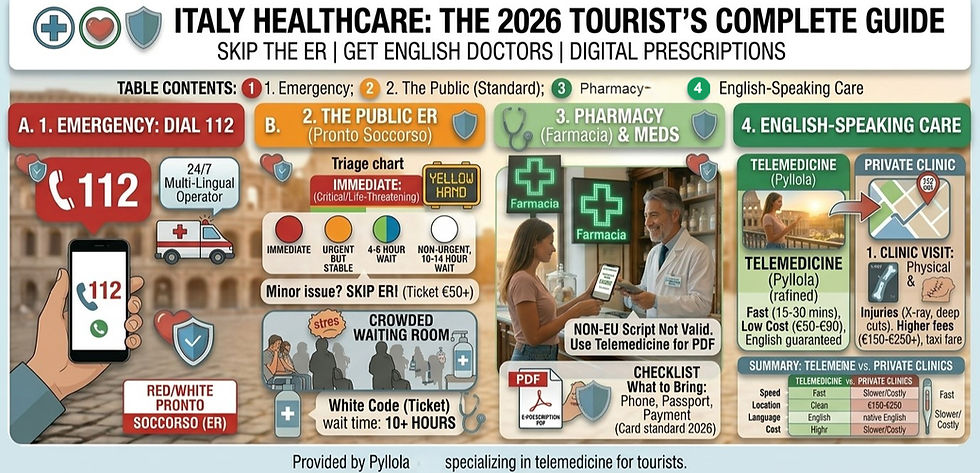
If you experience gastrointestinal discomfort, high fever, or severe anxiety following an accidental meal exposure, do not waste your vacation waiting in hospital triage rooms.
Pyllola provides fast, browser-based telehealth consultations with licensed, English-speaking doctors across Italy.
Flat-Rate Consultation: €89 (Itemized receipts provided for easy travel insurance reimbursement)
Prescriptions & Care: If needed, an official Italian e-prescriptions (Ricetta Bianca) sent directly to your phone, valid at any local farmacia.
Hours: Open Daily, 8:00 AM – 10:30 PM (CET)
📚 Scientific References & Clinical Guidelines
Centers for Disease Control and Prevention (CDC). Toxoplasmosis - Parasites & Pregnancy Guidelines. U.S. Department of Health and Human Services. Available at: cdc.gov/toxoplasmosis
World Health Organization (WHO). Listeriosis: Risk assessment and prevention in vulnerable populations, including pregnant women. WHO Food Safety Series.
European Food Safety Authority (EFSA). The European Union One Health 2022 Zoonoses Report: Listeria monocytogenes and Toxoplasma gondii prevalence in ready-to-eat foods. EFSA Journal.
Italian Ministry of Health (Ministero della Salute). Sicurezza alimentare in gravidanza: Linee guida per la prevenzione delle infezioni trasmesse da alimenti. Direzione Generale per la Igiene e la Sicurezza degli Alimenti e la Nutrizione.
American College of Obstetricians and Gynecologists (ACOG). Nutrition During Pregnancy and Food Safety Guidelines (FAQ001). ACOG Clinical Practice Guidelines.
Medical & Clinical Disclaimer:
The information provided in this guide is for educational and informational purposes only and does not constitute formal medical advice. Individual health requirements during pregnancy vary. Always consult your obstetrician, primary healthcare provider, or a qualified physician regarding specific dietary restrictions, pre-existing conditions, or sudden symptoms while traveling. If you experience severe abdominal pain, high fever, continuous vomiting, or abnormal bleeding, seek immediate emergency medical care.