Suspected Pneumonia in Italy? Symptoms & ER Guide
Updated: Jul 15
I'm a tourist in Italy and I Think I Have Pneumonia: What should I Do?
Traveling alone in a foreign country can be both exciting and challenging. However, facing a potentially serious health issue like pneumonia while you're away from home can be particularly frightening. If you find yoursef in Italy with Pneumonia, or at least you suspect you have pneumonia, it's crucial to take immediate and appropriate steps to ensure your well-being and to get an urgent care visit.

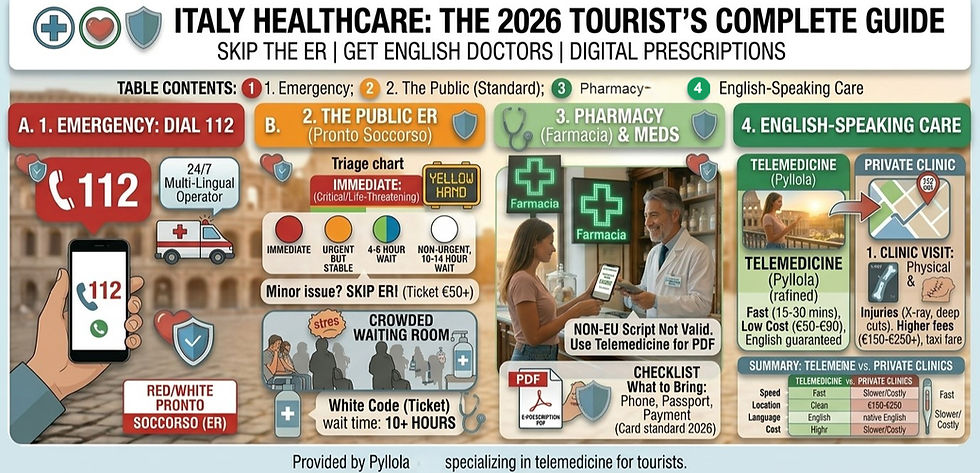
🚨 STOP: IS THIS AN EMERGENCY? If you are experiencing extreme difficulty breathing, bluish lips/fingernails, confusion, or chest pain that radiates to your arm/jaw, do not read further. Call 112 immediately.
The first thing to remember is that coughing doesn’t equal having pneumonia. Most coughs in travelers are caused by Bronchitis (viral) or Post-Nasal Drip (allergies/colds). Pneumonia is a deep lung infection. A key differentiator is often High Fever (>38.5°C) and a 'rattling' sound or pain deep in the chest when you breathe.
Do not wait for it to 'go away.' In the elderly or those with asthma, pneumonia can progress rapidly.
Here's a guide on what to do if you think you have pneumonia while traveling solo in Italy.
While a video call cannot replace a physical exam or an X-ray, it is the perfect first step. A Pyllola doctor can observe your breathing rate, check your oxygenation levels (if you have a smartwatch or pulse ox), and determine if you can be treated at your hotel with antibiotics or if you must go to a hospital immediately.
This short article does not intend to be a medical advice nor a recommendation of any kind but serves to focus on a relatively common problem travelers may encounter with some tips regarding the best action to take in this situation.

Recognizing the Symptoms of Pneumonia
Pneumonia is an infection that inflames the air sacs in one or both lungs, which can fill with fluid or pus. Symptoms to watch for include:
- Persistent cough, which may produce phlegm
- Fever, chills, and sweating
- Shortness of breath and rapid breathing
- Chest pain, especially when coughing or breathing deeply
- Fatigue and muscle aches
- Nausea, vomiting, or diarrhea
If you experience any combination of these symptoms, it's essential to seek medical attention promptly. It should be emphasized that part of those symptoms are common to other mild respiratory infections and the distinction between a common cold and a bacterial (or viral) pneumonia should be made by a qualified medical doctor.
Immediate Steps to Take if you suspect you're having Pneumonia
1. Stay Calm and Assess Your Symptoms:
While it's easy to feel overwhelmed, staying calm is important. Take note of your symptoms, their severity, and how long you've been experiencing them. Drink more water than usual, particularly if you have high fever or sweating or in summertime.
2. Seek Medical Assistance:
- Use Telemedicine Services: The fastest and easiest way to get a consultation with a doctor without leaving your accommodation is using a telehealth service. It is quick, affordable and you can get high quality medical care almost immediately. In Italy, service like Pyllola Telemedicine can connect you with experienced physicians for an online consultation. This can be particularly useful for initial advice and guidance on your next steps and for assessment of the situation. It has the advantage that doctors speak your language (which is relatively difficult to find in Italy), they can give you electronic prescription to alleviate your symptoms or antibiotics if the doctor thinks you need and guide you how to handle the disease.
- Contact Your Hotel Reception or Host: They can provide information on nearby medical facilities and may help arrange transportation.
- Visit a Local Pharmacy: Italian pharmacists are well-trained and can offer advice on over-the-counter medications that may help alleviate your symptoms. In most large cities you can find pharmacies that are open 24/7. They cannot give you antibiotics without a prescription from a doctor, so if that’s what you’re looking for, don’t waste your time.
3. Find a Doctor or Hospital:
Italy has a well-developed healthcare system with both public and private options. Public hospitals (Ospedale) generally offer comprehensive care, and some staff members speak English. Hospital’s ERs are usually crowded so you should expect long waiting time before encountering a physician. ER's waiting rooms are full of people with other diseases that can be contagious so elderly or people with previous medical condition should visit ERs only if you feel the situation is bad enough. Private clinics may provide faster service but can be more expensive, it's rarer to find people that speak English and scheduling an appointment can be more challenging.
4. Emergency Services:
If your symptoms are severe, such as difficulty breathing or chest pain, call emergency number 112 for immediate assistance.
What to Expect at the Hospital or Doctor’s visit to asses a probable lung infection
- Diagnosis: In most cases explaining the doctor your symptoms, your past medical history and answering his questions the doctor will likely have a good idea of what’s the real problem you’re really having (In a video-chat the doctor will be impressed by the way you talk, your respiratory rate and overall status). In a hospital setup he may also perform a physical examination and may order a chest X-ray or blood tests to diagnose pneumonia.
- Treatment: Depending on the severity, treatment may include antibiotics (for bacterial pneumonia), antiviral medications (for viral pneumonia), or supportive care such as oxygen therapy and fluids, in case it is indeed a severe bacterial pneumonia.
- Hospitalization: In severe cases, hospitalization may be necessary. Public hospitals provide excellent care but be prepared for potential language barriers; having a translation app can be helpful.

Pneumonia Post-Treatment Care and Recovery
1. Follow Medical Advice: Adhere strictly to the treatment plan provided by your doctor, including completing the full course of prescribed medications.
2. Rest and Hydration: Ensure you get plenty of rest and stay hydrated. Avoid strenuous activities until you are fully recovered.
3. Follow-Up: Schedule a follow-up appointment with a doctor to monitor your recovery. This can be done through local healthcare providers or via telemedicine services.
Travel Medical Insurance
Before traveling, ensure you have comprehensive travel insurance that covers medical emergencies. This can save you significant costs and stress if you require medical treatment abroad.
While being alone in a foreign country with a serious illness like pneumonia can be fearsome. Recognizing the symptoms early, seeking prompt medical attention, and following through with treatment and recovery plans are key steps to managing your health and ensuring a safe continuation of your travels.
Remember, resources like hotel staff, local pharmacies, and telemedicine services like Pyllola Telemedicine where you can immediately consult with a doctor by a video-call right from your phone are there to support you in navigating this challenging situation.