Medical Clearance for Flying: When Do You Need a Fit-to-Fly Certificate?
Updated: Jul 22
Traveling the world is an incredible experience, but occasionally, an unexpected health twist - like a sudden illness, a minor injury, or a recent surgical procedure - can cause a brief detour in your plans. When this happens, ensuring you are aligned with international aviation safety standards is the best way to keep your journey moving forward seamlessly.
While it might feel like an extra administrative step, airline health regulations are genuinely designed to protect your well-being. If you are recovering from a medical event while abroad, securing an official "Fit-to-Fly" certificate is a straightforward way to guarantee a smooth check-in, satisfy gate agents, and ensure a comfortable flight home.
Why Do Airlines Care If You Are Sick?
The environment inside a commercial airplane cabin is vastly different from being on the ground. Once a plane reaches cruising altitude, the cabin is pressurized, which significantly lowers the amount of oxygen in the air and causes gases inside the human body to expand by up to 30%.
For a healthy passenger, these changes are barely noticeable. But for someone recovering from an illness, surgery, or a fracture, this atmospheric shift can trigger severe medical emergencies.

Did You Know? The air pressure inside a flying aircraft is roughly equivalent to standing on top of an 8,000-foot mountain. This decrease in pressure causes natural gas pockets in the body to expand, which can put dangerous stress on healing wounds, internal stitches, and respiratory systems.
Because the captain and crew are responsible for the safety of everyone on board, airline gate staff are trained to look for signs of physical distress. They can, and will, deny boarding to anyone who appears medically unstable unless they possess an authorized "Fit-to-Fly" certificate.
Common Health Conditions That Require Doctor Clearance Before Takeoff

While mild colds or minor muscle strains won’t raise any red flags, several common medical situations will require formal clearance. Airlines generally restrict travel if you have recently experienced:
Recent Surgery: Because gases expand mid-air, flying too soon after abdominal, chest, or eye surgery can rupture internal stitches or cause internal bleeding.
Scuba Diving: Flying within 24 hours of a deep dive can cause dangerous decompression sickness (the bends) due to nitrogen bubbles expanding in the bloodstream.
Contagious Illnesses: If you are actively showing symptoms of a highly infectious disease (such as severe respiratory infections, chickenpox, or measles), airlines will refuse boarding to protect other passengers.
Recent Bone Fractures: If you had a hard cast put on a broken bone within the last 48 hours, you cannot fly. The swelling inside a fresh cast at high altitudes can cut off blood circulation.
Severe Respiratory or Cardiac Events: Recent chest pains, an unmanaged asthma attack, or a recent stroke or heart attack require absolute medical clearance before stepping onto a plane.
If you fall into any of these categories but are deemed medically stable enough by a physician to travel safely, you must present a signed and stamped declaration to the airline at check-in.
The Insurance Angle: When You Need to Cancel Instead
Sometimes, the medical reality is that you simply cannot fly. If an illness or injury forces you to stay behind while traveling abroad, your focus shifts from boarding the plane to protecting your financial investment.
Most major commercial airlines and global travel insurance providers are incredibly strict when it comes to cancellations. They will not process a ticket refund or an insurance claim based on your word alone - they require an official, signed medical declaration from a licensed physician confirming that traveling was medically inappropriate at the time of the flight.
How Pyllola Provides Fast, Professional Travel Clearance (Fit-to-Fly Certificate)
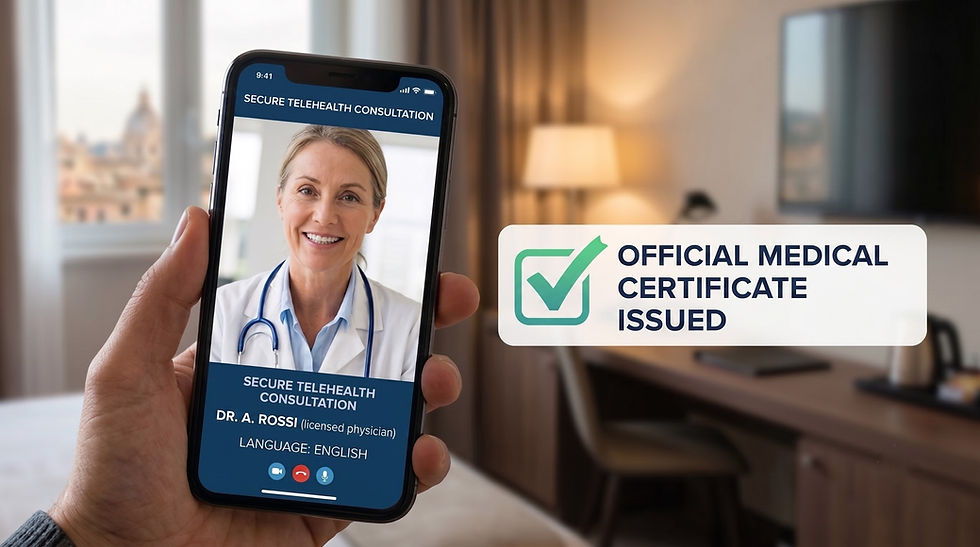
Navigating a foreign hospital system or finding an English-speaking clinic while dealing with a medical disruption is incredibly stressful. As a full-scale digital clinic, Pyllola bridges this gap by providing professional online medical visits and prescription refills right from your smartphone.
If you need an urgent travel evaluation, our experienced, licensed physicians provide the thorough medical oversight required by international carriers:
Virtual Medical Evaluation: You book a telehealth consultation directly through our platform. An English-speaking doctor will responsibly review your medical history and assess your current health status via video.
Official Digital Documentation: If the physician determines you are safe to travel (or confirms you are medically unfit to fly and require a refund), they will instantly issue your official certificate.
Universal Acceptance: Every Pyllola certificate is digitally signed under EU legal standards and explicitly stamped with the doctor’s official medical license registration details (Numero di Iscrizione all'Ordine dei Medici), making it fully compliant with airline and insurance verification requirements.
Medical emergencies are unpredictable, but your healthcare shouldn't be. Whether you need a "Fit-to-Fly" clearance to head home safely, an urgent prescription refill, or the proper paperwork to claim an airline refund, Pyllola ensures you have expert medical backing, 7 days a week.